Hair Topper vs Wig vs Hair Extensions: A Professional Salon Decision Guide
Feb 10,2026
Salons lose clients not because of the product—but because of the wrong recommendation. This guide helps stylists and salon owners choose between a hair topper, a wig, and hair extensions with a clear decision framework, so you can reduce complaints, protect the client’s bio hair, and increase repeat bookings.
| Feature | Hair Topper | Wig | Hair Extensions |
| Coverage | Partial (crown/part/hairline) | Full head coverage | No scalp coverage (length/volume) |
| Best for thinning | Yes (targeted thinning) | Yes (advanced or medical loss) | Often not ideal for thinning |
| Comfort | Light, breathable | Can feel warmer/heavier | Depends on method; tension risk |
| Styling | Blends with bio hair | Full style change, no blending required | Styles like bio hair but adds weight |
| Application time | Fast (clip-in) to moderate (integration) | Moderate | Varies; pro methods take time |
| Risk level (thin hair) | Low–medium | Low (if cap fit is correct) | Medium–high (traction/tension) |
| Salon business model | Resale + refit/maintenance | High-ticket, consultation-based | Service + maintenance cycles |
Step 1: Start With the Client’s Hair Loss Pattern (The Salon Decision Rule)
Recommend a Hair Topper if:
- Thinning is mainly at crown/part
- Client still has enough bio hair to blend and anchor
- Client wants a natural scalp look without full coverage
- Client prefers a lighter feel for daily life
Pro Tip: Toppers are often the “lowest-risk first step” for new hair loss clients because they’re reversible and easy to adjust.
Recommend a Wig if:
- Hair loss is advanced or medical (diffuse loss, alopecia, chemo, severe shedding)
- Bio hair is too fragile to hold clips/tension
- Client wants a consistent look every day with full coverage
Pro Tip: Wigs reduce blending complexity. If blending is impossible, a wig is usually the safer recommendation.
Recommend Hair Extensions if:
- Client has healthy density (enough hair to carry added weight)
- Goal is length and overall volume, not covering a thin part/crown
- Client understands maintenance and re-install cycles
Important: If the client is already thinning, extensions may increase tension and lead to worse shedding if not chosen carefully.
Step 2: Choose the Right Topper Type (So You Don’t Get Complaints)
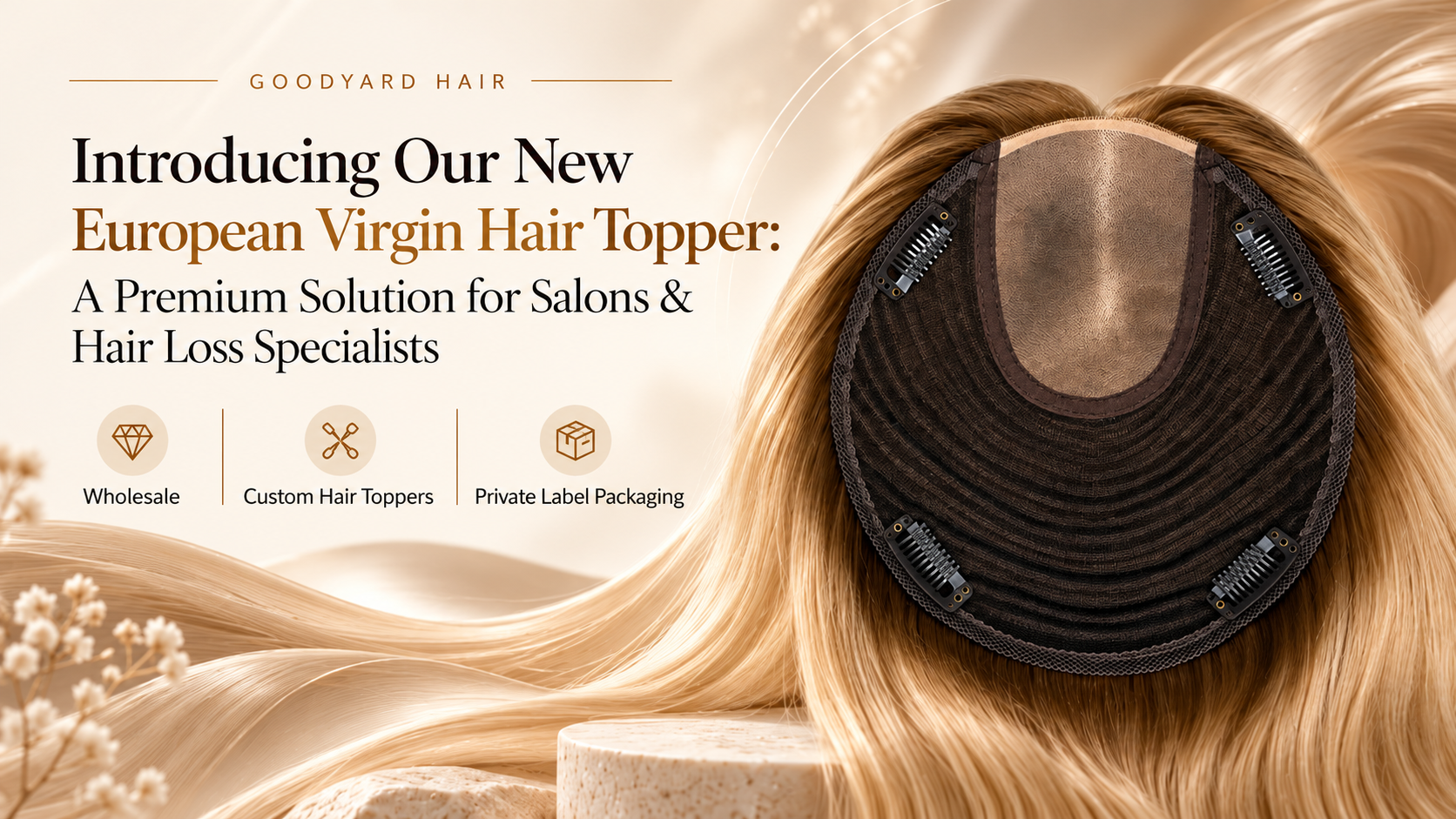
When a topper is the right solution, base selection is what determines whether the result looks “salon-level” or “obvious”.
Fast base guide for salons:
- Mono Top: natural scalp look, breathable, flexible parting (daily salon services)
- Silk Top: premium scalp realism, clean parting, no visible knots (high-end clients)
- Lace / HD Lace: soft edge, lightweight, best for hairline realism (front blend)
- Skin base: thin and flat finish, clean edge (custom-fit requests)
If you work with a consistent hair topper supplier, it’s easier to keep results repeatable across clients and across months.
Step 3: The Risk-Control Framework (How to Avoid “Wrong Product” Problems)
When salons say “I’m afraid to recommend the wrong product,” it usually means one of these risks:
Risk A: “It doesn’t look natural”
Fix: choose the correct coverage and base type first (then density).
- If the client wants scalp realism → silk/mono
- If hairline is the main concern → lace/HD lace
Risk B: “It’s uncomfortable / slips”
Fix: match the solution to lifestyle and anchoring ability.
- Thin anchoring hair → topper attachment needs caution
- Very fragile hair → wig may be safer
Risk C: “It damaged the client’s bio hair”
Fix: be conservative with extensions on thinning clients.
If the client is thinning and you still choose extensions, minimize tension and avoid methods that overload fine hair.
Real Salon Scenarios (Use These in Consultations)
Scenario 1: Crown thinning, still has bio hair
Recommend: Hair topper
Why: targeted coverage + natural blend + easy resale/maintenance cycle
Scenario 2: Diffuse thinning, low density all over
Recommend: Wig
Why: blending is unreliable; full coverage gives the cleanest and safest result
Scenario 3: Healthy hair, wants length + fullness
Recommend: Extensions
Why: goal is not scalp coverage; extensions are designed for length/overall volume
Salon Tips: How to Explain the Choice to Clients (Simple Script)
Use this three-line explanation:
- “Do you need coverage or length/volume?”
- “If it’s coverage at crown/part, a topper is usually best.”
- “If it’s full coverage, a wig is the cleanest option.”
Clients love clarity. Salons love fewer returns.
For Professional Buyers: Sourcing Matters More Than Marketing
If your salon or distribution program plans to scale, focus on supply reliability:
- Consistent batches help maintain color, density, and texture expectations
- A dependable hair toppers manufacutrer can support repeat orders, OEM, and stable QC
- Bulk programs require stable production and clear specifications
If you are building a salon program, consider working with b2b hair topper suppliers who can support bulk hair toppers with consistent standards (density, base construction, color continuity, and restock planning).
Quick Checklist: What to Ask Before Recommending
Ask these 6 questions in every consultation:
- Where is the thinning? (crown/part/hairline/all-over)
- Is the client willing to blend with bio hair?
- Does the client need daily wear or occasional wear?
- Does the client have enough hair to anchor clips/tension safely?
- Is the client sensitive scalp / medical hair loss?
- What is the client’s maintenance tolerance?
Conclusion: A Simple Professional Rule
- Topper = targeted coverage + natural blend
- Wig = full coverage + transformation
- Extensions = length/overall volume (requires healthy bio hair)
When salons use a clear decision framework and source consistently, they reduce service risk and increase client trust.
Looking for stable supply and program support?
Work with a factory-level hair topper supplier that can support salon programs, private label, and repeat orders.
Comment