How Salon Professionals Can Accurately Diagnose Part-Line Thinning
Apr 30,2026
How Salon Professionals Can Accurately Diagnose Part-Line Thinning
As a hairstylist, accurately diagnosing hair thinning is crucial for providing clients with appropriate solutions. Among the various types of hair loss, part-line thinning is one of the most common issues.
However, the problem lies in identifying whether it is caused by a medical condition, natural aging, or hair styling practices. Within this blog, we will enlighten salon professionals on how to diagnose part line thinning and offer proper solutions, including wigs and toppers factory products, hair toppers, and more.
Understanding Part-Line Thinning
On the hand, part-line thinning happens when there is a thinning or loss of hair along the natural part line on the scalp. This is a gradual process that many clients may not immediately notice, leading them to delay seeking a solution. Thinning along the hair parting can be caused by various factors, such as genetics, hormonal changes, or stress. Identifying the early signs of thinning in this area enables professionals to timely recommend the appropriate solutions.
For hair topper suppliers, knowing the early signs of part-line thinning will help hair stylists provide the right information to people on what they can do to help their situation. It is vital for salon professionals to make people aware of this condition so that they do not feel embarrassed about the condition. Providing hair toppers will greatly boost an individual’s confidence.
Diagnosing Part-Line Thinning: A Step-by-Step Process
- Examine the Scalp’s Natural Part
The first step in determining a part-line thinning condition is to observe a natural part of the scalp closely. This involves looking for areas where there are spaces in the hairline, or where there are areas where the scalp seems more prominent than normal. These are areas where there is a thinning condition, which is more evident when there is a particular direction in which the hair is parted. By moving this hair around this particular area, it is possible to determine whether there is thinning in this particular line, or whether other areas are thinning as well.
- Check for Excessive Hair Shedding
Excessive shedding is another factor to look out for when checking for part-line thinning. This means that when a client complains of excessive shedding, or you notice a lot of hair on their comb or on the floor, then there is a possibility of part-line thinning. It is worth noting that when there is excessive shedding, it is a natural process in hair growth; however, when there is excessive shedding and thinning, then there is a possibility of part-line thinning.
- Assess the Hair Density and Texture
Then, the density and texture of the hair along the part line should be evaluated. Generally, thinning hair is finer and less strong. It may also be less dense. By comparing the hair along the part with the hair on the rest of the scalp, it can be easily seen if there is a change in the texture. Understanding the difference in texture can also help stylists recommend the best type of hair topper distributors for each client’s specific needs.
Offering Solutions: Hair Toppers as a Natural Remedy
Once the condition of part-line thinning has been correctly identified, the next course of action is to provide clients with a solution for the condition. Hair toppers can prove to be a great solution for hair thinning in the part-line area. It is essential to work with a reliable wigs and toppers factory to ensure that you are able to procure hair toppers that look natural on your clients.

3''×5'' Bead-in Topper
Choosing the Right Hair Topper
Selecting the right topper supplier is vital in order for you to offer your clients the best hair toppers available in the market. For example, matching the hair color of the hair topper to the natural hair of your client is vital. The texture of the hair topper should also match the natural hair of your client. The weight of the hair topper should not be too heavy for your client’s hair. Ideally, the hair topper should look natural on your client’s hair.
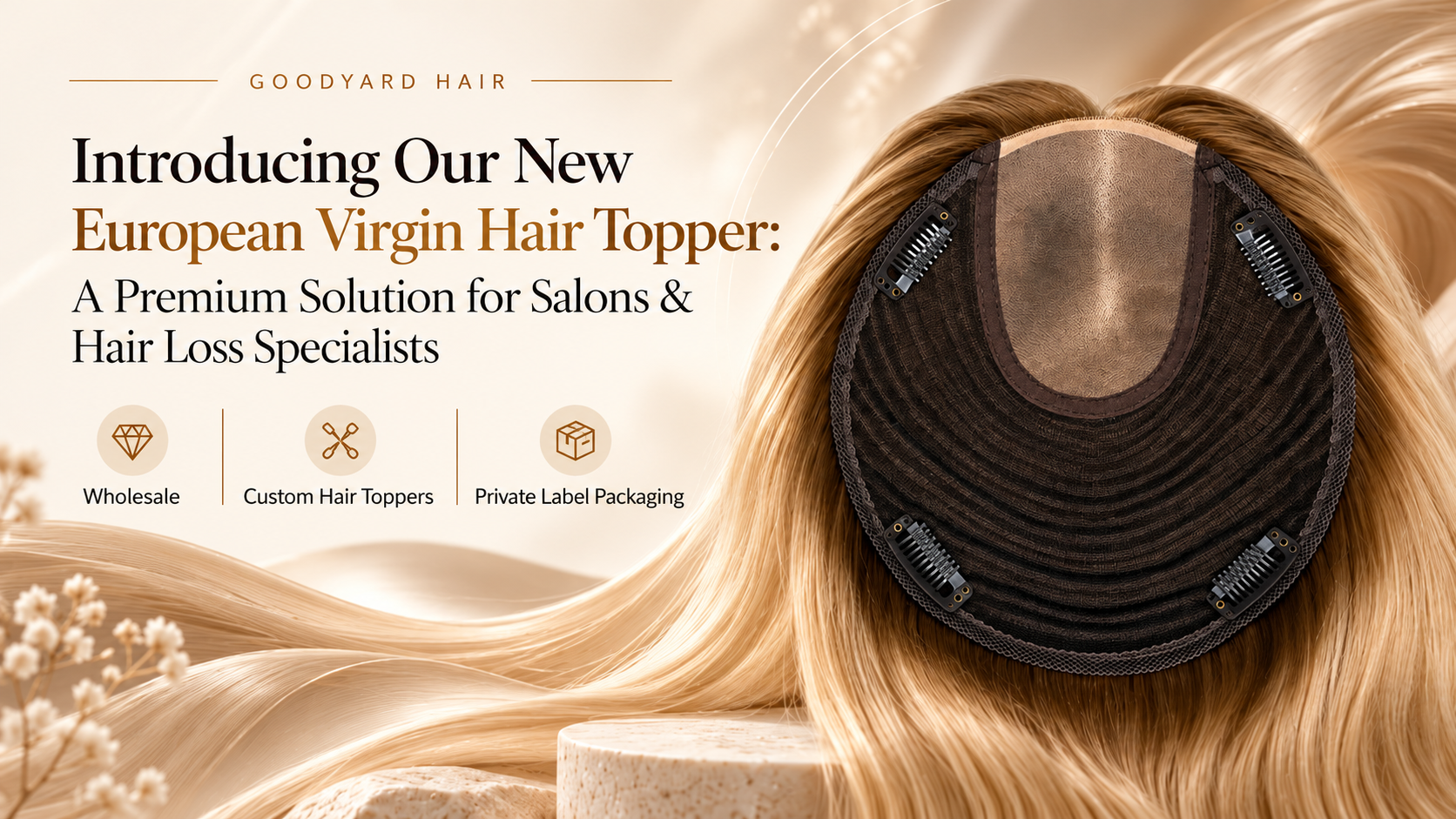
As a professional in the hair industry, you should also offer customization. Most hair topper distributors allow stylists to customize the hair topper in order for it to better match the hair type of your client. Thus, hair topper distributors allow professionals in the hair industry to offer unique hair toppers that can satisfy the specific hair requirements of your clients. Goodyard’s new hair toppers such as 3’’×5’’ Bead-in Topper, 6.5’’× 7’’ No-Trim Lace Human Hair Topper and 5.5” × 6.5” Mono Top with Lace Front were created precisely for this purpose.

5.5" × 6.5" Mono Top with Lace Front
| Hair Toppers Name | Material | Advantages | Sales Volume Share |
| 3’’×5’’ Bead-in Topper | 100% Premium Human Hair | proprietary bead-lock structure, highly secure and comfortable | 11% |
| 6.5''× 7'' No-Trim Lace Human Hair Topper | Burmese hair | faster fittings and more consistent results | 14% |
| 5.5" × 6.5" Mono Top with Lace Front | Remy Human Hair | innovative wave-contour hairline construction, Breathable Mono Top Base | 15% |

6.5''× 7'' No-Trim Lace Human Hair Topper
Conclusion
Diagnosing part-line thinning in your client is one of the important skills that salon professionals should possess. By observing the client’s scalp, checking the density of the hair, and knowing the client’s health history, you can now determine the right diagnosis. After diagnosing the thinning hair, you can now offer your client the right solutions such as hair toppers from the best hair topper supplier or wigs and toppers factory.
For those looking for the right hair toppers distributors in the business, look no further than Goodyard. With a variety of choices from natural hair toppers to customized ones, we help hair stylists fulfill the specific demands of their clients, giving them beautiful hair every time.
Comment