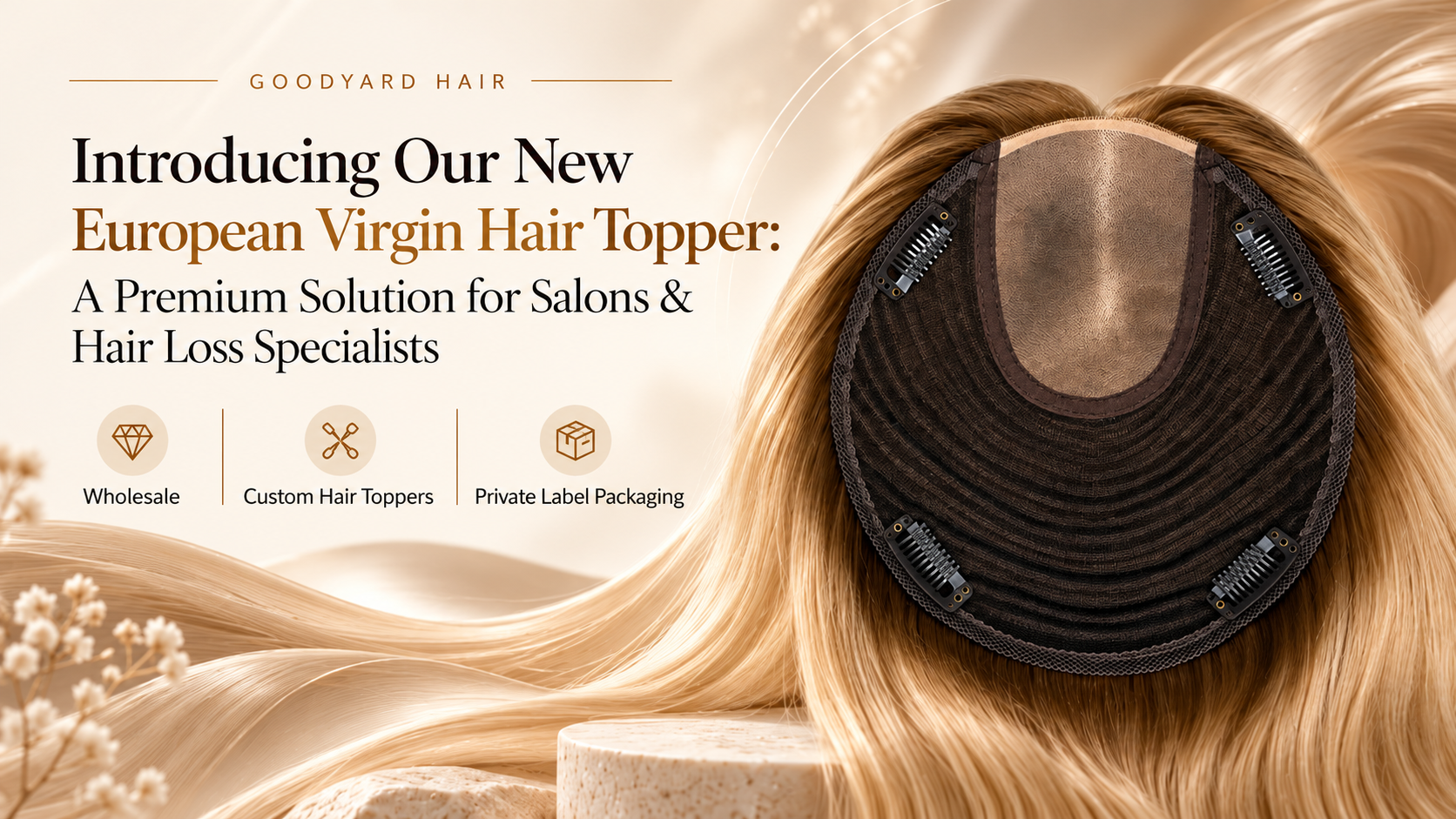
Professional Hair Topper Color Matching Guide for Salons
Apr 30,2026
Why Color Precision Defines Salon Success
The current market for hair services calls for more than just volume addition. It is the ability to create an invisible style that matters most, and it requires perfect color matching to avoid having the treatment show.
The choice of an experienced hair topper supplier is crucial for salons as it provides consistent shade systems and helps maintain accurate color matching to ensure customer loyalty and affordable prices for services.
Core Color Matching Methods for Professionals
A perfect blend is not achieved through mere visual judgment. Professional salons utilize various ways such as:
1.Natural Light Color Comparison
Color must always be compared in natural light since it shows the true color undertone.
2.Professional Color Ring
A professional color ring allows a proper comparison of color from all shades.
3.Comparison of Hair Samples
Client samples can be sent to an approved hair topper manufacturer, especially for premium clients.
Such techniques ensure professionalism and accuracy.

Hair Topper Color Rings
Key Factors That Influence Color Accuracy
Even with proper equipment, there are multiple elements that play into the final outcome:
1.Multitoned Natural Hair
A client will not have just one flat color but will have variation from their roots to ends because of environmental factors and prior processing.
2.Lighting Conditions
It is possible for indoor lighting to make it hard to see true tonal values, so it requires multi-location evaluations.
3.Compatibility with Skin Undertones
The undertones can be warm, cool, or neutral; these need to be evaluated in relationship to the topper color.
Stylists need to consider all these elements as a whole.
| Category | Professional Standard | Recommended Method | B2B Value for Salons |
| Base Color Identification | 90%+ match to root area tone | Root zone sampling under natural light | Reduces mismatch complaints by ~60% |
| Undertone Matching | Warm / Cool / Neutral classification | Skin tone + hair undertone analysis | Improves natural blending perception by 45% |
| Hair Type Adaptation | Straight / Wavy / Curly adjustment factor | Texture-based reflection calibration | Reduces visible mismatch risk |
| Batch Color Stability | ≤3% variation across production lots | QC-controlled dye process | Ensures wholesale consistency |
| Correction Rate | <8% adjustment requirement | Pre-installation sample approval | Saves labor cost & time per client |
Shade Selection Strategy for Hair Integration Systems
While choosing the correct shade, one must begin by determining the base color. The base area will offer the most reliable and accurate shade. Following that, the effort should be directed towards creating dimensions using highlights and lowlights, since contemporary hairstyles do not contain a single shade of color. In more complicated situations, it becomes necessary to collaborate with a professional hair topper manufacturer to obtain custom-made colors for each client.

Men's Hair Systems Color Ring
Adapting Color Matching to Different Hair Types
Hair texture also plays an integral role in how color appears. When hair is straight, the way light reflects on its surface makes color mismatch very apparent. Conversely, when hair is wavy or curly, the light will reflect on the uneven surface, and the mismatch won’t be as visible. It is crucial to consider the crown and the parting area when working with hair that is getting thinner since the scalp can influence color perception.
Avoiding Common Color Matching Mistakes
However, despite all the experience, there can be some errors made. For example, one of the most common is concentrating on the colors that you can see on the top without considering undercolors; consequently, the color mix becomes artificial-looking. In addition, choosing similar colors without adding any diversity will create the same problem. For salons working with hair topper distributors, maintaining color consistency across different batches is equally important to avoid unnecessary adjustments and costs.

Hair topper
The Value of Professional Supplier Collaboration
In the end, the success in getting accurate color matching is highly reliant on the supply chain. Building a long-term relationship with reputable B2B hair topper supplier will guarantee that you have a good system of colors, quality products, and the ability to customize when required.
Maintaining Color Consistency Over Time
The first step of matching is not the end-all; maintaining the match ensures ongoing customer satisfaction:
- Sulfate-free haircare products must be used
- Frequent washing should be avoided
- Color depositing products should be used as necessary
- Keep your toppers away from sunlight
Educating clients on proper maintenance builds trust and loyalty.

3''X5'' Bead-in Topper
Conclusion: Turning Color Matching into a Competitive Advantage
In summary, the practice of color matching goes beyond being a technical process; rather, it is an essential competitive advantage in today’s salon setting. This process decides how well a hair topper can give the appearance of a real-looking hair.
In light of the increasing demand for personalization and naturalness, salons that succeed in color matching stand to excel in hair toppers’ business.
Comment